
Blog Post:
Snoring can be a major issue for both the person snoring and their partner, causing disruptions in sleep and leading to other health problems. In many cases, snoring is caused by a deviated septum, which is a common condition where the thin wall between the nostrils is off-center or crooked. This can make breathing through the nose difficult, leading to snoring. While there are various solutions available for snoring, one non-invasive option that has gained popularity is a mouthpiece for snoring combined with treatment for a deviated septum.
What is a mouthpiece for snoring?
A mouthpiece for snoring, also known as a mandibular advancement device (MAD), is a small oral appliance that is worn at night. It works by gently shifting the lower jaw and tongue forward, opening up the airway and allowing for easier breathing. This prevents snoring and can also be beneficial for those with sleep apnea, a serious sleep disorder where breathing repeatedly stops and starts during sleep.
How does a deviated septum contribute to snoring?
A deviated septum can cause snoring in a few ways. First, the misalignment of the nasal passage can make it difficult to breathe through the nose, forcing the person to breathe through their mouth. This can lead to snoring as air moves through the mouth and vibrates the soft tissues in the throat. Additionally, the obstruction in the nasal passage can create a vacuum effect, pulling the soft tissues in the throat closer together and causing them to vibrate, resulting in snoring.
Treating snoring and deviated septum with a mouthpiece
A mouthpiece for snoring can be an effective solution for those suffering from both snoring and a deviated septum. By shifting the lower jaw and tongue forward, it can help open up the airway and prevent the vibrations that cause snoring. Additionally, some mouthpieces have nasal dilators, which are small inserts that can help to open up the nasal passages. This can be beneficial for those with a deviated septum, as it can help to improve the airflow through the nose.
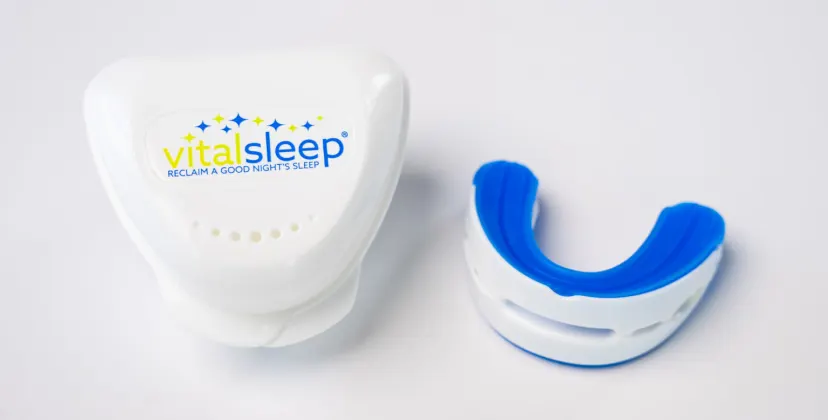
Mouthpiece for Snoring and Deviated Septum: A Non-Invasive Solution
Benefits of using a mouthpiece for snoring and a deviated septum
One of the main benefits of using a mouthpiece for snoring and deviated septum is that it is a non-invasive solution. Many people are hesitant to undergo surgery to correct a deviated septum, as it can be costly and have a long recovery time. Using a mouthpiece is a more affordable and less invasive option. Additionally, it can also improve the quality of sleep for both the person using the mouthpiece and their partner. Snoring can be disruptive and lead to poor sleep quality, but using a mouthpiece can help reduce or eliminate snoring, leading to a better night’s sleep for everyone involved.
Other non-invasive solutions for deviated septum
Aside from using a mouthpiece, there are other non-invasive solutions for deviated septum that can be combined with a mouthpiece for snoring. One option is nasal strips, which can be placed on the nose to help open up the nasal passages. This can be helpful for those with a deviated septum, as it can improve airflow through the nose. Another option is nasal dilators, which can be inserted into the nostrils to help open up the airway. These can also be effective for those with a deviated septum and can be used in conjunction with a mouthpiece for snoring.
Consulting with a healthcare professional
Before using any type of treatment for snoring or a deviated septum, it is important to consult with a healthcare professional. They can properly diagnose the cause of snoring and determine if a deviated septum is present. They can also recommend the best course of treatment, whether it be a mouthpiece, surgery, or a combination of non-invasive solutions. It is important to follow their guidance and instructions for using a mouthpiece to ensure safe and effective results.
In conclusion, a mouthpiece for snoring combined with treatment for a deviated septum can be an effective and non-invasive solution for those struggling with snoring. By gently shifting the lower jaw and tongue forward, a mouthpiece can help open up the airway and prevent snoring. Additionally, using other non-invasive solutions such as nasal strips or dilators can further improve the airflow through the nose. It is important to consult with a healthcare professional before using any treatment for snoring or a deviated septum to ensure proper diagnosis and safe use of a mouthpiece.
SEO metadata: