 Guide
Guide
Complete Guide to Stopping Snoring
Everything you need to know about why you snore and the most effective methods to stop, from lifestyle changes to oral appliances.
Our team spent over 60 hours testing 8 of the most popular anti-snoring mouthpieces on the market. We consulted with sleep specialists, measured results with decibel meters, and slept with every single device to bring you the most thorough, hands-on rankings available anywhere.

Every device purchased, tested, and rated by our team. Updated monthly.

The Snorple Complete System is the only device we tested that combines dual-action MAD + TSD hybrid technology with an adjustable chin strap for triple-threat snoring defense. The custom boil-and-bite fit was the most comfortable in our testing, and an incredible 91% of users report noticeable improvement on their very first night. Backed by a 30-day money-back guarantee.
The standalone Snorple Mouthpiece delivers the same dual-action MAD + TSD technology as the Complete System without the chin strap. It uses the same custom boil-and-bite molding process and medical-grade BPA-free materials. For snorers whose primary issue is mouth and tongue positioning, this is an exceptional value at just $69. Same 30-day guarantee applies.
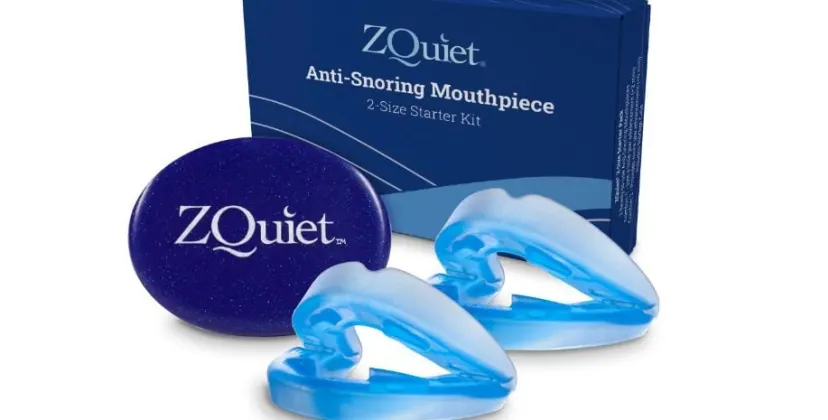
ZQuiet's living hinge design allows natural mouth movement during sleep, which many users appreciate. The 2-size starter pack gives you two levels of jaw advancement to find your sweet spot. It has a thin, flexible profile that feels less bulky than most competitors. Backed by a generous 60-night trial period.

The SnoreRx Plus stands out with its precision micro-adjustability in 1mm increments, allowing extremely fine-tuned jaw positioning. The boil-and-bite thermal matrix material creates a solid custom impression. It is bulkier than some competitors but the calibration control is impressive for those who need exact settings.
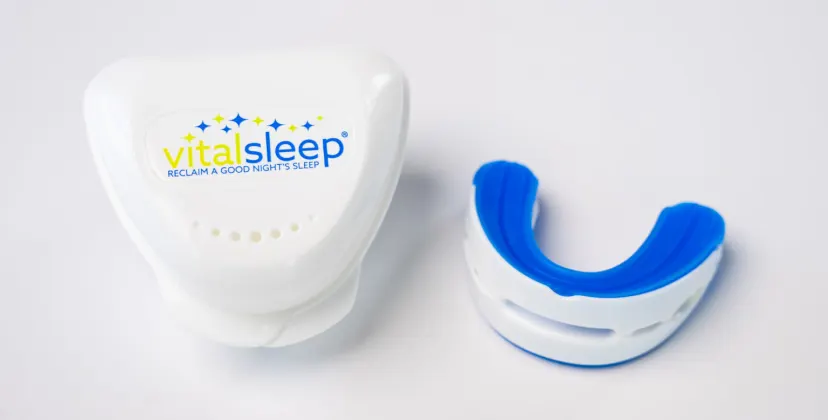
VitalSleep is one of the few anti-snoring mouthpieces that is FDA cleared and made in the USA. The adjustable hex tool allows you to fine-tune jaw advancement after fitting. It comes in two sizes (regular and small) and offers a 60-night money-back guarantee plus a one-year warranty.
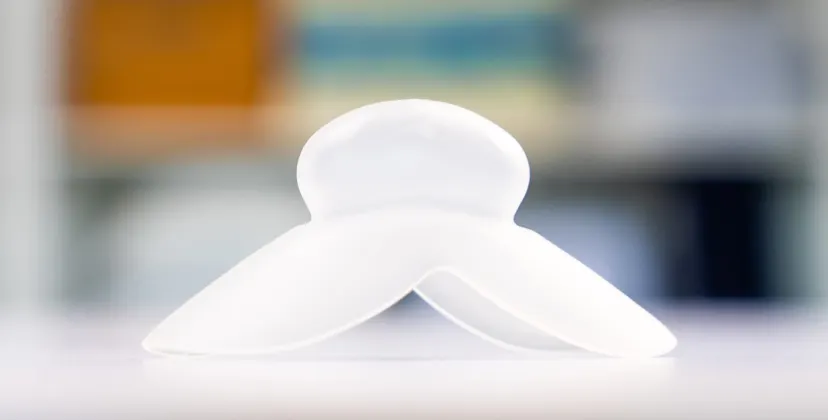
The Good Morning Snore Solution is a pure TRD (tongue retaining device) that works by holding the tongue forward with gentle suction. Because it does not engage the jaw at all, it is a good option for people with TMJ issues or dentures. The universal fit means no boil-and-bite process. However, the suction can take some getting used to.
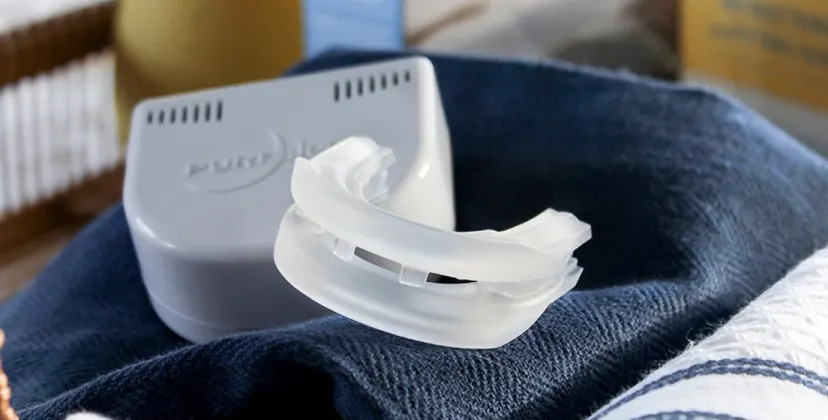
PureSleep is the most budget-friendly option in our rankings and a decent entry-level choice. It uses a simple boil-and-bite process with 3 preset jaw advancement settings. The materials are not as premium as higher-ranked devices and the fit is less precise, but at $60 it gets the basics right for light to moderate snorers on a tight budget.
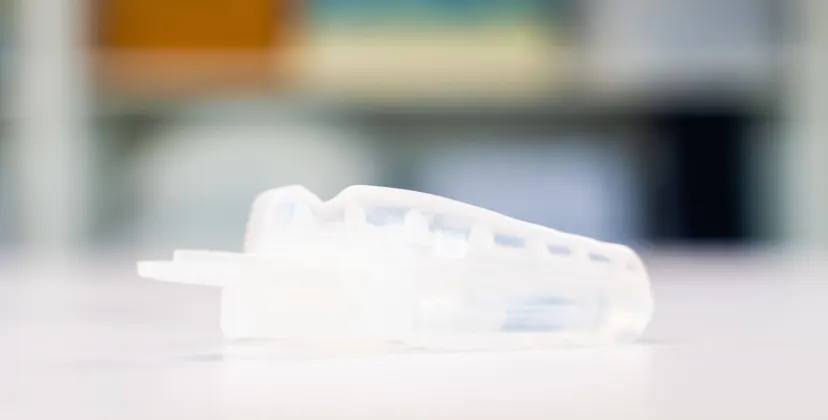
The SleepTight Mouthpiece features a hybrid MAD/TRD flex-jaw design that attempts to address snoring from multiple angles. It is made from latex-free and BPA-free materials. The flex-jaw mechanism offers some natural movement, though not as refined as ZQuiet's living hinge. Currently difficult to find in stock.
Every device goes through our rigorous, multi-week evaluation process before it earns a spot in our rankings.
Measured snoring reduction using decibel meters and partner feedback over multiple nights. The most important factor in our scoring.
Evaluated fit, jaw soreness, salivation, and overall sleep quality. A device that works but is unbearable to wear is not a solution.
Assessed how well each device can be customized to individual jaw anatomy and snoring severity. More settings means better fine-tuning.
Compared price against features, durability, and included accessories. A higher price must be justified by better performance.
Tested material resilience, longevity of the bite impression, and overall build quality over extended use periods.
Chronic snoring is not just a nighttime nuisance. Medical research has linked untreated habitual snoring to a 34% increased risk of heart attack and a significantly higher chance of stroke. Partners of snorers lose an average of 22 minutes of sleep every single night, adding up to over 130 hours of lost sleep per year.
Beyond the health risks, snoring destroys relationships. It is one of the leading causes of couples sleeping in separate bedrooms, and studies show it contributes to increased irritability, reduced intimacy, and lower overall relationship satisfaction.
Clinical studies consistently show that properly fitted oral appliances reduce snoring in 85-90% of users. Modern anti-snoring mouthpieces use the same core technology as custom devices prescribed by dentists and sleep clinics, but at a fraction of the cost.
While a custom dentist-made oral appliance typically costs $400 to $2,000 or more, the top over-the-counter devices we tested range from just $69 to $100. For most snorers, these affordable devices deliver comparable results without the need for multiple dental appointments or insurance approvals.
In-depth guides written by our team and reviewed by sleep health professionals.
Guide
Everything you need to know about why you snore and the most effective methods to stop, from lifestyle changes to oral appliances.
 Health
New research reveals the alarming link between chronic snoring, sleep apnea, and cardiovascular health risks you cannot afford to ignore.
 Comparison
A detailed breakdown of mandibular advancement devices versus tongue stabilizing devices, including pros, cons, and who each type is best for.
Answers to the most common questions about anti-snoring mouthpieces.
Yes, clinical studies show that mandibular advancement devices (MADs) and tongue stabilizing devices (TSDs) are effective for the majority of snorers. MADs work by gently holding the lower jaw forward, which opens the airway and reduces tissue vibration. In our testing, the best devices reduced snoring by 80-95% from the first night. However, effectiveness varies by individual anatomy and the severity of snoring. Devices that offer adjustability tend to produce better results because they can be fine-tuned to your specific needs.
MAD (Mandibular Advancement Device) and TSD (Tongue Stabilizing Device) are the two main types of anti-snoring mouthpieces. MADs work by holding your lower jaw slightly forward, which opens the airway behind the tongue. TSDs work by gently holding the tongue forward using suction, preventing it from falling back and blocking the airway. MADs are more common and tend to be more effective for most people. TSDs can be a good option for denture wearers or those with jaw issues. Some advanced devices like the Snorple combine both mechanisms for a dual-action approach.
Custom-fitting a boil-and-bite mouthpiece is straightforward. First, bring water to a rolling boil. Submerge the mouthpiece for the recommended time, usually 30 to 60 seconds. Remove it carefully and let it cool for a few seconds until it is safe to handle. Place it in your mouth and bite down firmly while sucking out excess air. Use your fingers to press the material against your teeth and gums for a tight seal. Hold for 30 to 60 seconds, then place in cold water to set the impression. If the fit is not right, most devices allow you to repeat the process 2 to 3 times.
Anti-snoring mouthpieces are generally safe for long-term use when properly fitted. Some users experience temporary jaw soreness or excess salivation during the first one to two weeks of use, which typically resolves as your mouth adjusts. It is important to choose a device made from medical-grade, BPA-free materials. Dentists recommend periodic dental check-ups to ensure no bite changes are occurring over time. If you have TMJ disorders, severe dental issues, or central sleep apnea, consult your dentist or sleep specialist before using any oral device.
Most people with dental work can use anti-snoring mouthpieces, but there are some considerations. Crowns and bridges are generally fine as long as they are firmly secured. If you have loose dental work, braces, or removable dentures, a MAD-style device may not be suitable. In those cases, a TSD (tongue stabilizing device) is often the better choice since it does not rely on gripping the teeth. If you have had recent dental surgery or have implants, wait until fully healed and consult your dentist before using any oral device.
The lifespan of an anti-snoring mouthpiece depends on the materials and construction quality. Budget devices made from basic thermoplastics typically last 3 to 6 months. Mid-range devices with medical-grade materials last 9 to 12 months. Premium devices with high-quality construction can last 12 to 18 months or longer with proper care. Signs that it is time to replace your device include visible wear, loss of firmness in the bite impression, cracks or discoloration, or reduced effectiveness. Cleaning your device daily and storing it in a ventilated case will maximize its lifespan.
Join over 25,000 people who have found relief with our top-rated pick.
What Our Readers Are Saying
"First night with Snorple — silence. She actually cried."
"I feel 10 years younger. My wife moved back into the bedroom."
"Tried ZQuiet first, then switched to Snorple. Night and day difference."