
The Link Between Snoring, TMJ, and Sleep Apnea: How a Mouthpiece Can Help
Snoring, TMJ, and sleep apnea are all common sleep-related issues that can greatly impact one’s quality of life. While these conditions may seem unrelated, there is actually a strong link between them. In fact, snoring, TMJ, and sleep apnea often coexist and can even exacerbate each other if left untreated. Fortunately, there is a solution that can help alleviate all three issues: a mouthpiece.
Snoring is a common problem that affects roughly 40% of adults. It occurs when the airway becomes partially blocked during sleep, causing vibrations in the throat that result in the loud, disruptive sound we know as snoring. While snoring may seem like a harmless annoyance, it can actually be a sign of a more serious condition: sleep apnea.
Sleep apnea is a sleep disorder characterized by pauses in breathing during sleep. These pauses can last from a few seconds to minutes and can occur multiple times throughout the night. There are three types of sleep apnea: obstructive, central, and complex. Obstructive sleep apnea (OSA) is the most common type and is caused by an obstruction in the airway, often due to the collapse of soft tissues in the throat. Central sleep apnea occurs when the brain fails to send signals to the muscles that control breathing. Complex sleep apnea is a combination of both obstructive and central sleep apnea.
TMJ, or temporomandibular joint disorder, is a condition that affects the jaw joint and muscles that control jaw movement. This can cause pain and discomfort in the jaw, face, and neck, as well as difficulty chewing and speaking. TMJ can also contribute to sleep issues, as the pain and discomfort can make it difficult to fall asleep and stay asleep.
The Link Between Snoring, TMJ, and Sleep Apnea: How a Mouthpiece Can Help
So, what is the link between these three conditions? Snoring can be a sign of obstructive sleep apnea, and TMJ can contribute to the development of OSA. When the jaw is misaligned, it can cause the airway to become blocked, leading to snoring and potentially sleep apnea. Additionally, the pauses in breathing during sleep can cause the jaw to clench or grind, exacerbating TMJ symptoms. This vicious cycle can greatly impact one’s sleep and overall health.
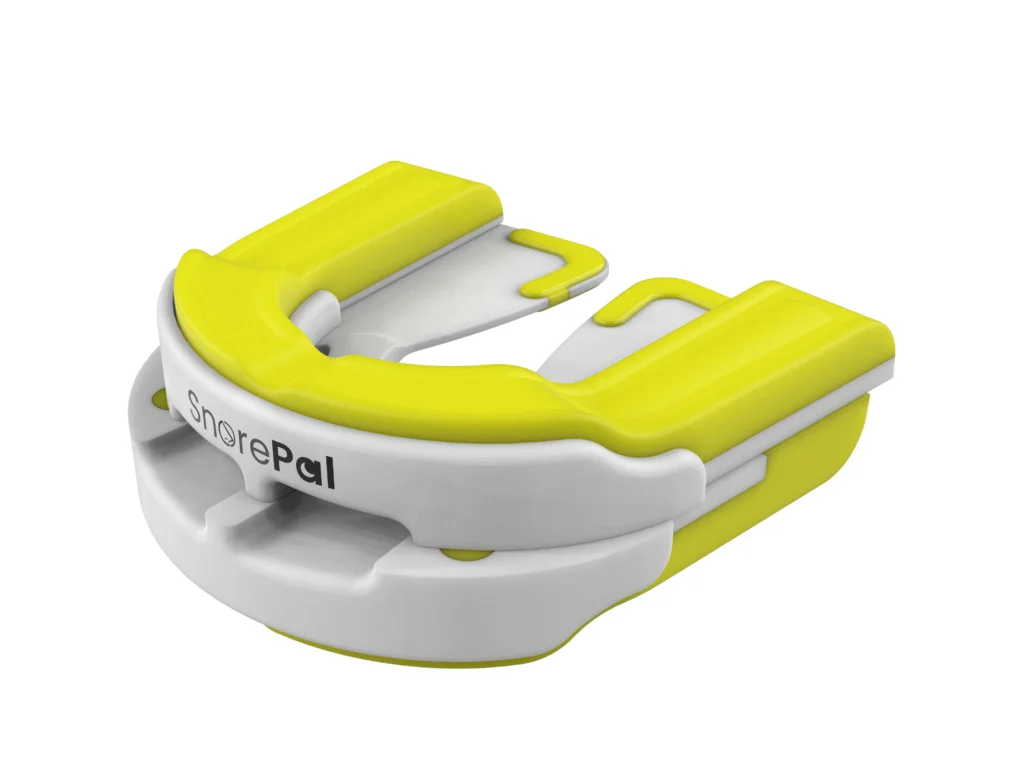
Fortunately, a mouthpiece can help break this cycle and provide relief for snoring, TMJ, and sleep apnea. A mouthpiece, also known as a mandibular advancement device, works by shifting the lower jaw slightly forward, opening up the airway and preventing the collapse of soft tissues. This allows for proper airflow during sleep, reducing or eliminating snoring and improving breathing for those with sleep apnea.
But how does a mouthpiece help with TMJ? By keeping the jaw in a slightly forward position, a mouthpiece can help alleviate tension and pressure on the jaw joint, reducing pain and discomfort. This can also prevent teeth grinding and clenching, which is often associated with sleep apnea and can worsen TMJ symptoms.
It’s important to note that not all mouthpieces are created equal. Custom-made mouthpieces, designed by a dentist or orthodontist, are the most effective as they are tailored to fit the individual’s mouth and address their specific needs. Over-the-counter mouthpieces may be more affordable, but they may not fit properly and can cause discomfort or even worsen TMJ symptoms.
In addition to using a mouthpiece, there are other lifestyle changes that can help with snoring, TMJ, and sleep apnea. Maintaining a healthy weight, avoiding alcohol and sedatives before bed, and sleeping on your side instead of your back can all contribute to better sleep and reduced symptoms.
In summary, snoring, TMJ, and sleep apnea are all interconnected and can greatly impact one’s quality of sleep and overall health. A mouthpiece can be an effective solution for all three issues, as it helps open the airway and alleviate tension on the jaw joint. However, it’s important to consult with a dentist or orthodontist to determine the best course of treatment and to ensure a proper fit for a mouthpiece.