
Snoring is a common problem that affects millions of people around the world. While it may seem like a harmless sleep habit, snoring can actually be an indication of underlying health issues, particularly in relation to oral health. In this blog post, we will delve deeper into the connection between snoring and oral health, and how addressing oral health issues can potentially help in reducing snoring.
First and foremost, it is important to understand what snoring is and how it occurs. Snoring is the loud, hoarse sound that is produced when air flows through the throat while sleeping. This happens when the muscles in the throat relax and partially block the airway, causing vibrations in the soft tissues of the throat. While snoring can be caused by a variety of factors such as obesity, age, and alcohol consumption, it can also be linked to oral health issues.
One of the main oral health issues that can contribute to snoring is a misalignment of the jaw. When the jaw is not properly aligned, it can affect the position of the tongue and other soft tissues in the mouth, leading to a narrowed airway and increased chances of snoring. This misalignment can be due to genetics, or it can be a result of habits such as teeth grinding or clenching. In such cases, seeking treatment from a dentist or orthodontist can help in correcting the alignment of the jaw and reducing snoring.
Another oral health problem that can contribute to snoring is obstructive sleep apnea (OSA). OSA is a serious sleep disorder where the airway becomes completely blocked, causing pauses in breathing and leading to loud snoring. This condition is often caused by an enlarged tongue, tonsils, or adenoids, which can obstruct the airway while sleeping. OSA not only disrupts sleep, but it can also have serious health consequences if left untreated. Seeking treatment from a sleep specialist or dentist can help in managing OSA and reducing snoring.
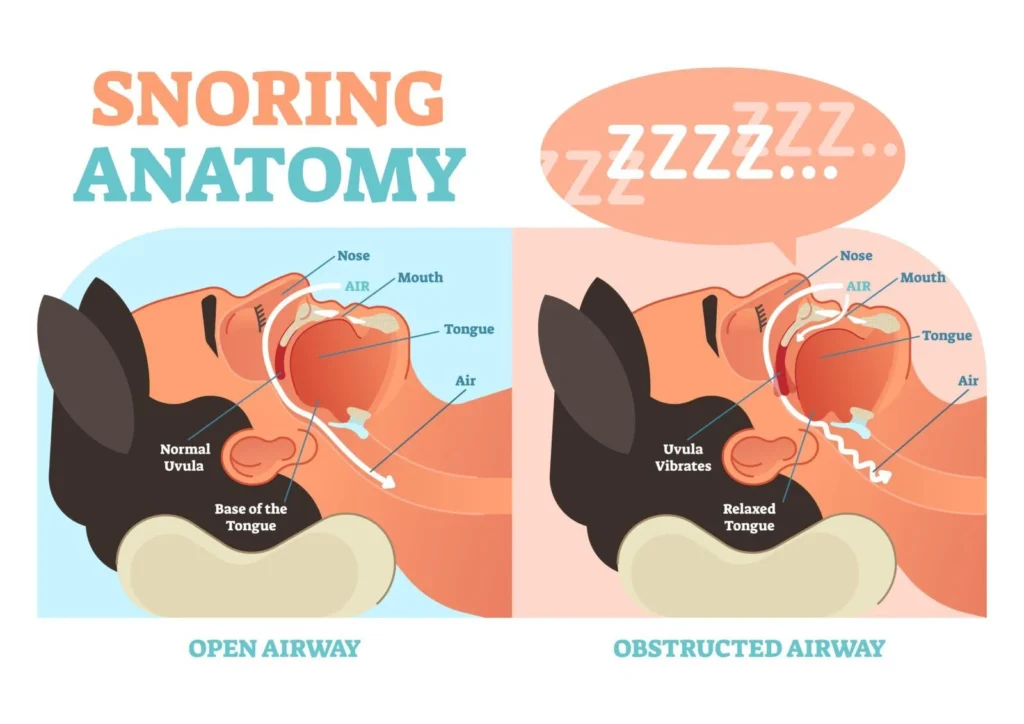
Breaking Down the Connection Between Snoring and Oral Health
Poor oral hygiene can also play a role in snoring. When bacteria in the mouth build up, it can lead to inflammation and infections in the nasal and throat tissues, causing nasal congestion and obstructed breathing. This can contribute to snoring, as well as other respiratory issues. Maintaining good oral hygiene, such as brushing and flossing regularly, can help in preventing these issues and reducing snoring.
In addition to oral health issues, snoring can also have an impact on oral health. The vibrations caused by snoring can lead to dry mouth, which is a condition where the mouth does not produce enough saliva. Saliva plays a crucial role in maintaining oral health by neutralizing acids and washing away food particles and bacteria. Without enough saliva, the mouth becomes more susceptible to tooth decay, gum disease, and bad breath. Therefore, addressing snoring can not only improve oral health, but it can also prevent potential oral health problems.
So, what can be done to address snoring and its impact on oral health? The first step is to consult with a dentist or doctor to determine the underlying cause of snoring. Depending on the cause, different treatment options may be recommended. For example, correcting jaw misalignment may require orthodontic treatment, while OSA may be managed with a continuous positive airway pressure (CPAP) machine. In some cases, lifestyle changes such as losing weight, quitting smoking, or avoiding alcohol before bedtime may also help in reducing snoring.
In conclusion, there is a strong connection between snoring and oral health. Oral health issues such as misaligned jaw, obstructive sleep apnea, and poor oral hygiene can contribute to snoring, while snoring can also have a negative impact on oral health. Therefore, it is important to address both snoring and oral health issues in order to improve overall health and quality of sleep. If you or your partner snore regularly, it is recommended to consult with a healthcare professional to determine the underlying cause and seek appropriate treatment.