
Blog Post: Exploring the Different Types of Dental Appliances for Snoring
Snoring is a common problem that affects millions of people worldwide. Not only can it disrupt one’s own sleep, but it can also disturb their partner’s sleep as well. While there are several reasons why people snore, one of the most common causes is a restricted airway. This can be due to various factors such as enlarged tonsils, a deviated septum, or excess weight. In such cases, dental appliances can be an effective solution to help reduce snoring and improve sleep quality. In this blog post, we will explore the different types of dental appliances for snoring and how they work.
1. Mandibular Advancement Devices (MADs)
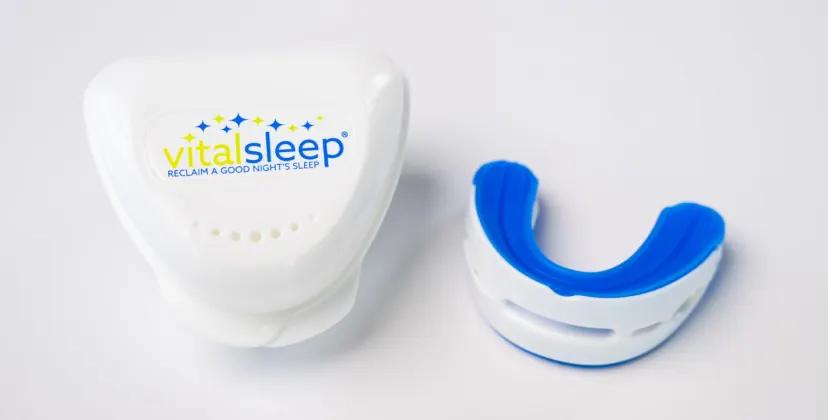
Mandibular Advancement Devices (MADs) are the most commonly used dental appliances for snoring. They work by pushing the lower jaw forward, which in turn opens up the airway and reduces snoring. These devices usually consist of two trays that fit over the upper and lower teeth, with a hinge in the middle to allow for movement. MADs are custom-made by a dentist to ensure a proper fit and can be adjusted to suit an individual’s needs. They are easy to use and can improve snoring in most cases.
2. Tongue Retaining Devices (TRDs)
Tongue Retaining Devices (TRDs) are similar to MADs in that they also hold the lower jaw forward. However, instead of trays, they have a suction cup that holds the tongue in place, preventing it from falling back and blocking the airway. TRDs are more suitable for people with dentures or missing teeth as they do not rely on teeth for support. They may take some time to get used to, but they can be an effective solution for snoring caused by a tongue obstruction.
3. Mandibular Repositioning Mouthpieces (MRMs)
Mandibular Repositioning Mouthpieces (MRMs) are an advanced type of MAD that allows for more precise adjustments. They have screws or rods that can be turned to gradually move the lower jaw forward, making it a more customized solution for snoring. MRMs are also more discreet compared to other types of dental appliances, as they do not have visible hinges or suction cups. However, they may require more frequent visits to the dentist for adjustments.
Exploring the Different Types of Dental Appliances for Snoring
4. Palatal Implants
Palatal Implants are a permanent solution for snoring that involves surgically placing small implants in the soft palate. These implants stiffen the tissue and prevent it from collapsing and blocking the airway. This procedure is usually done under local anesthesia and takes less than an hour to complete. It is a simple and effective option for those who do not wish to use dental appliances every night.
5. Nasal Dilators
Nasal Dilators are not technically dental appliances, but they can still help with snoring caused by nasal congestion. These devices are inserted into the nostrils to open up the nasal passages, allowing for better airflow. They are relatively inexpensive and can be handy for people with allergies or a deviated septum. However, they may not be the best solution for snoring caused by a restricted airway in the throat.
6. Combination Therapy
In some cases, a combination of dental appliances may be used to address snoring. For example, a person may use a MAD to push the lower jaw forward and a nasal dilator to open up the nasal passages. This can be an effective solution for people with multiple factors contributing to their snoring. However, it is essential to consult with a dentist before using multiple devices to avoid any complications or discomfort.
In conclusion, snoring can have a significant impact on one’s quality of sleep and overall well-being. Dental appliances can be an effective solution for reducing snoring and improving sleep quality. Whether it is a simple MAD or a more advanced MRM, there are various options available for people to choose from. It is crucial to consult with a dentist to determine the best type of dental appliance for an individual’s specific needs. With the right device and proper use, snoring can be significantly reduced, leading to better sleep and a healthier lifestyle.
Summary:
Snoring is a common problem caused by a restricted airway. In this blog post, we explored the different types of dental appliances for snoring, including Mandibular Advancement Devices (MADs), Tongue Retaining Devices (TRDs), Mandibular Repositioning Mouthpieces (MRMs), Palatal Implants, Nasal Dilators, and Combination Therapy. Each type of device works differently to address the underlying cause of snoring and can significantly improve sleep quality. It is essential to consult with a dentist to determine the best option for an individual’s specific needs.