
Silence the Snoring: A Guide to Mouthguards and Better Sleep
Snoring is a common issue that affects millions of people worldwide. Not only can it disrupt a person’s own sleep, but it can also disturb their partner’s sleep and lead to relationship problems. While there are various remedies and treatments available for snoring, one effective solution is the use of mouthguards. In this blog post, we will dive into the world of snoring and mouthguards, and how they can help improve sleep quality and silence snoring.
What Causes Snoring?
Before delving into the role of mouthguards in treating snoring, it is essential to understand what causes snoring in the first place. Snoring occurs when the airway becomes partially blocked during sleep, causing the tissues in the throat to vibrate and create a loud sound. This can happen due to various reasons, including:
1. Nasal Congestion: If the nasal passages are blocked or narrowed due to allergies or a deviated septum, it can lead to snoring.
2. Sleeping Position: Sleeping on the back can cause the tongue to fall back and block the airway, leading to snoring.
3. Age: As we age, the muscles in our throat tend to relax, making it easier for them to vibrate and cause snoring.
4. Weight: Excess weight can lead to the accumulation of fatty tissues in the throat, narrowing the airway and causing snoring.
5. Alcohol and Medications: Consuming alcohol or certain medications can relax the muscles in the throat, making snoring more likely.
How Mouthguards Can Help
Mouthguards, also known as oral appliances, are custom-made devices that are designed to keep the airway open during sleep. They work by repositioning the jaw and tongue to prevent them from blocking the airway. There are two main types of mouthguards: mandibular advancement devices (MAD) and tongue retaining devices (TRD).
Mandibular Advancement Devices (MADs)
MADs are the most commonly used type of mouthguards for snoring. They are designed to hold the lower jaw slightly forward, which helps to keep the airway open and prevent snoring. MADs are custom-made by a dentist or can be purchased over-the-counter. They are generally made of a soft material that is comfortable to wear and can be adjusted to fit the individual’s mouth.
Tongue Retaining Devices (TRDs)
TRDs are less common but can be an effective option for those who have trouble using MADs. These devices work by holding the tongue in place and preventing it from falling back and blocking the airway. TRDs are custom-made by a dentist and are generally made of a soft material that is comfortable to wear.
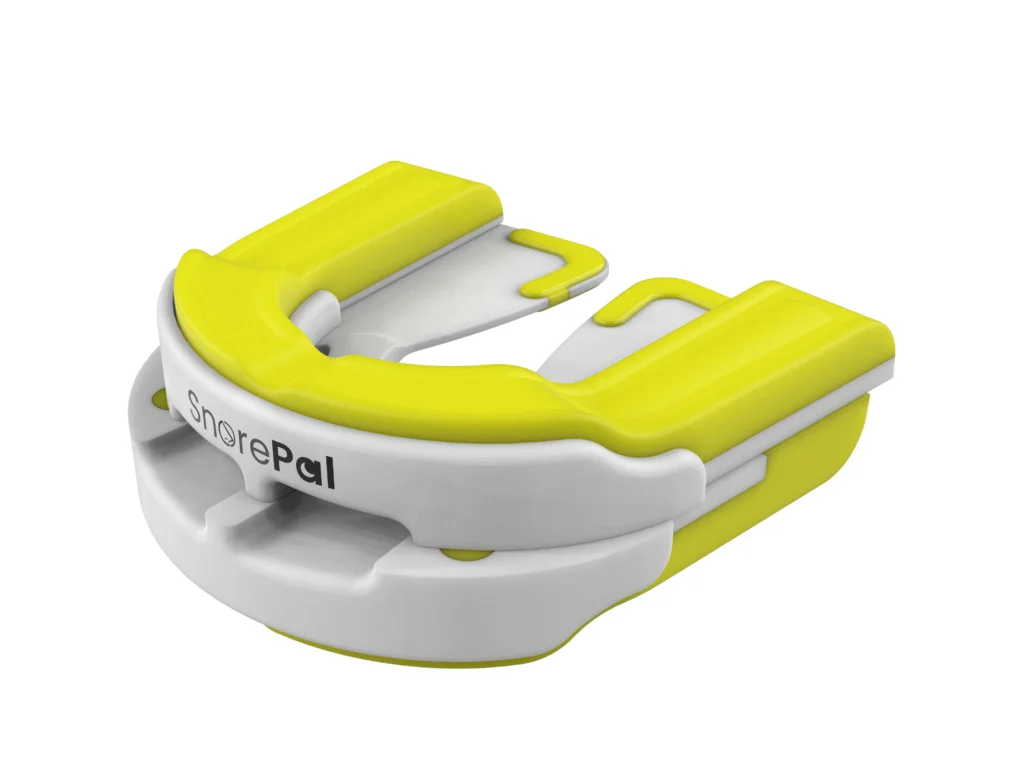
Silence the Snoring: A Guide to Mouthguards and Better Sleep
Benefits of Using Mouthguards for Snoring
1. Improved Sleep Quality: By keeping the airway open, mouthguards can help reduce or eliminate snoring, leading to better sleep quality for both the snorer and their partner.
2. Non-Invasive: Unlike other snoring treatments, such as surgery, mouthguards are non-invasive and do not require any recovery time.
3. Customizable: Mouthguards can be custom-made to fit the individual’s mouth, making them more comfortable to wear and more effective in treating snoring.
4. Portable: Mouthguards are small and easy to carry, making them a convenient option for those who travel frequently.
5. Cost-Effective: Mouthguards are a cost-effective option compared to other snoring treatments, making them accessible to a wider range of people.
Tips for Using Mouthguards
1. Consult a Dentist: It is essential to consult a dentist before using a mouthguard, as they can assess the cause of snoring and recommend the best type of device for the individual.
2. Follow Instructions: It is crucial to follow the instructions provided by the dentist or the manufacturer when using a mouthguard to ensure its effectiveness.
3. Clean Regularly: Mouthguards should be cleaned regularly to prevent the buildup of bacteria and ensure their longevity.
4. Replace When Needed: Mouthguards should be replaced every 6-12 months or as recommended by the dentist to maintain their effectiveness.
Conclusion
Snoring can have a significant impact on a person’s quality of life and relationships. While there are various treatments available, mouthguards have proven to be an effective and non-invasive solution for snoring. They can help improve sleep quality and silence snoring, leading to better overall health and well-being. By following the tips mentioned above and consulting a dentist, individuals can find the right mouthguard for their needs and enjoy a peaceful and snore-free sleep.
Summary:
Snoring can be a disruptive issue that affects both an individual’s sleep and their partner’s sleep. One effective solution for snoring is the use of mouthguards. These custom-made devices help keep the airway open during sleep, preventing snoring. There are two main types of mouthguards: mandibular advancement devices (MADs) and tongue retaining devices (TRDs). Using mouthguards can lead to improved sleep quality, and they are non-invasive, customizable, portable, and cost-effective. It is essential to consult a dentist, follow instructions, clean regularly, and replace when needed to ensure the effectiveness of mouthguards.