
Summary:
Snoring can be a serious issue that not only disrupts the sleep of the snorer but also their partner. It is often caused by enlarged tonsils, which can also lead to other health problems such as sleep apnea. One solution to combat snoring and enlarged tonsils is a procedure called 42, which is a combination of two methods: tonsillectomy and adenoidectomy. In this blog post, we will delve into the science behind 42 and how it effectively tackles snoring and enlarged tonsils.
First, let’s understand what causes snoring and enlarged tonsils. Snoring occurs when there is an obstruction in the airway, causing vibrations in the throat that produce the characteristic snoring sound. Enlarged tonsils are one of the most common causes of airway obstruction, especially in children. Tonsils are located at the back of the throat and act as the first line of defense against bacteria and viruses. However, when they become enlarged, they can block the airway, leading to snoring and other breathing difficulties.
One of the primary methods used to treat enlarged tonsils is a tonsillectomy, which involves the surgical removal of the tonsils. This procedure has been around for centuries and is considered a safe and effective treatment. However, it does have some drawbacks, such as pain, bleeding, and a long recovery time. This is where the science behind 42 comes into play.
42 is a combination of two procedures: tonsillectomy and adenoidectomy. While tonsillectomy involves the removal of the tonsils, adenoidectomy is the removal of the adenoids, which are also located in the back of the throat. Adenoids are similar to tonsils but are located higher in the throat. They are also a common cause of airway obstruction, particularly in children.
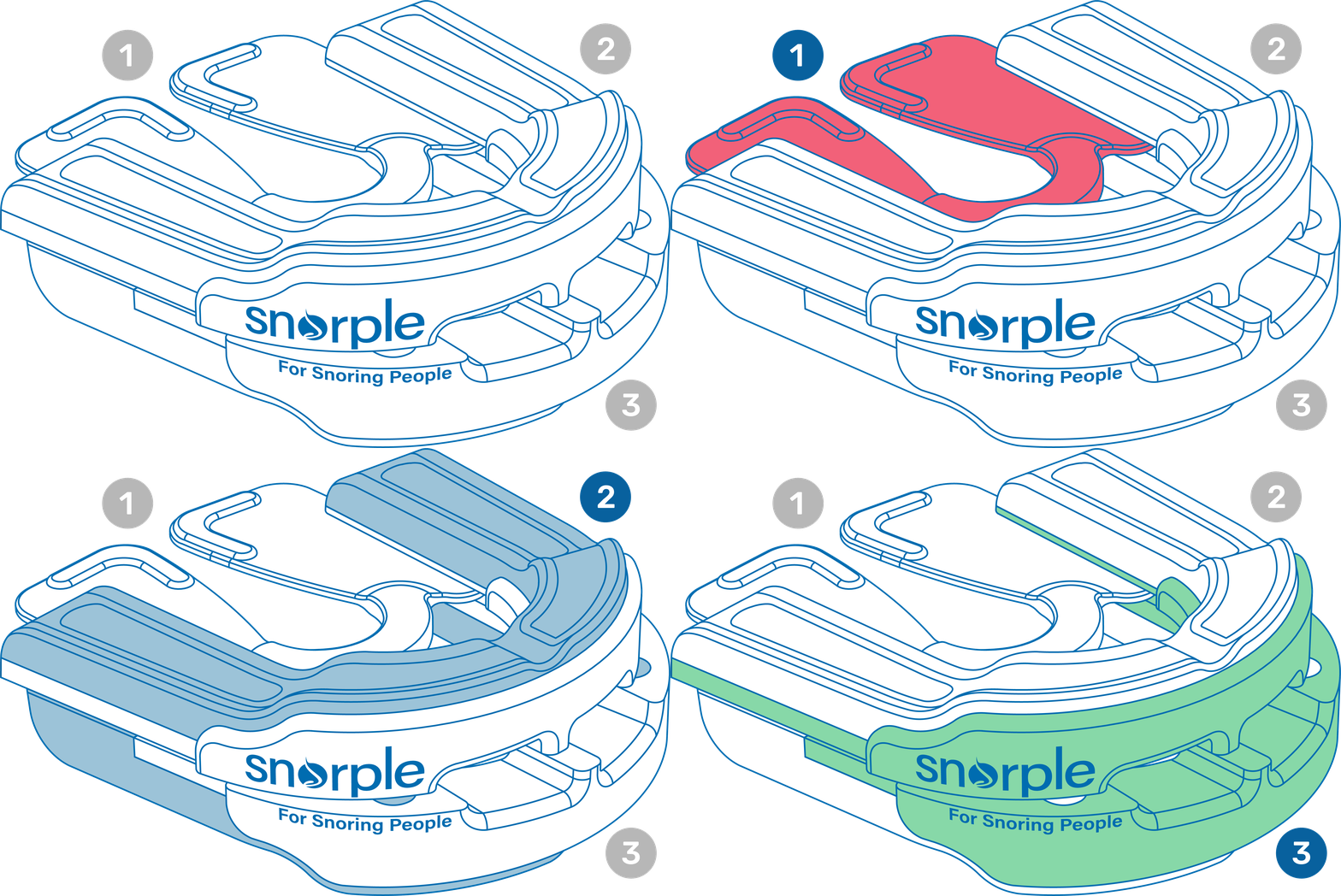
The Science Behind 42: How it Combats Snoring and Enlarged Tonsils
So, why is the combination of these two procedures so effective? The answer lies in the anatomy of the throat. The tonsils and adenoids are part of the lymphatic system, which helps fight infections. However, when they become enlarged, they can actually hinder the body’s ability to fight infections. By removing both the tonsils and adenoids, the airway is cleared, and the body can function more effectively in fighting off infections.
But how does this relate to snoring? Well, enlarged tonsils and adenoids can obstruct the airway, causing snoring. By removing these obstructions, the airway is cleared, and snoring is reduced or eliminated. In fact, studies have shown that 42 is highly effective in treating snoring and sleep apnea in both children and adults. This is because the removal of the tonsils and adenoids leads to improved airflow and better sleep quality.
Moreover, 42 can also have other health benefits. Enlarged tonsils and adenoids can cause recurrent infections, leading to frequent use of antibiotics. By removing these obstructions, the body’s immune system can function more efficiently, reducing the need for antibiotics. This can also lead to a decrease in the risk of other health problems associated with the overuse of antibiotics.
Furthermore, 42 is a minimally invasive procedure, meaning that it is less traumatic for the body compared to traditional open surgeries. This results in a shorter recovery time and fewer side effects, making it a safer option for both children and adults.
In conclusion, the science behind 42 is based on the anatomy of the throat and the removal of obstructions that can cause snoring and enlarged tonsils. By removing both the tonsils and adenoids, the airway is cleared, and the body can function more effectively in fighting infections. This procedure has been proven to be highly effective in treating snoring and sleep apnea and can also have other health benefits. So, if you or your loved one is struggling with snoring and enlarged tonsils, 42 may be the solution you’ve been looking for.