
Summary:
Getting a good night’s sleep is essential for our overall health and well-being. However, for many people, this can be a challenge due to snoring and deviated septum. Snoring can not only disrupt our own sleep but also affect our partner’s sleep. On the other hand, a deviated septum can lead to breathing difficulties and sleep apnea. In both cases, a mouthpiece can be a simple and effective solution. This blog post will explore the secret to restful sleep through the use of a mouthpiece for snoring and deviated septum.
The Importance of Sleep:
Before diving into the details, let’s first understand why getting enough sleep is crucial. Sleep is essential for our physical and mental health. It allows our body to repair and restore itself, boosts our immune system, and helps us maintain a healthy weight. On the other hand, lack of sleep can lead to a range of health issues, including heart disease, diabetes, and depression. Therefore, it is crucial to address any issues that may be interrupting our sleep.
Snoring and Deviated Septum:
Snoring occurs when the airway is partially blocked, causing vibrations in the throat. It can be caused by various factors such as nasal congestion, enlarged tonsils, or a deviated septum. A deviated septum is a condition where the wall between the nostrils is crooked, making one nasal passage smaller than the other. This can lead to breathing difficulties, especially during sleep, as the air struggles to pass through the smaller passage.
How a Mouthpiece Can Help:
A mouthpiece is a device that is inserted into the mouth to adjust the position of the jaw and tongue, keeping the airway open. It is a simple and non-invasive solution for both snoring and deviated septum. The mouthpiece works by pushing the lower jaw forward, preventing it from falling back and blocking the airway. This also helps keep the tongue from obstructing the airway, reducing snoring.
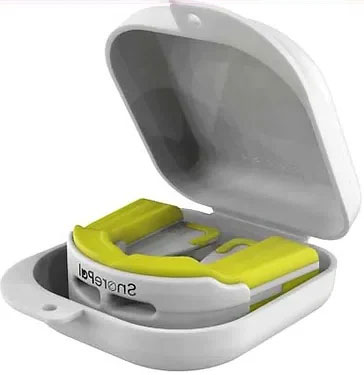
The Secret to Restful Sleep: A Mouthpiece for Snoring and Deviated Septum
Types of Mouthpieces:
There are two types of mouthpieces available for snoring and deviated septum: mandibular advancement devices (MADs) and tongue retaining devices (TRDs). MADs are the most commonly used and are custom-made by a dentist to fit the individual’s mouth. They work by holding the jaw in a slightly forward position, keeping the airway open. TRDs, on the other hand, work by holding the tongue in place, preventing it from falling back and blocking the airway.
Benefits of Using a Mouthpiece:
Using a mouthpiece for snoring and deviated septum can have several benefits. Firstly, it can significantly reduce or even eliminate snoring, leading to better quality sleep for both the user and their partner. It can also improve breathing, especially for those with a deviated septum, by keeping the airway open. This can help reduce the risk of sleep apnea, a potentially serious sleep disorder where breathing repeatedly stops and starts during sleep. Additionally, using a mouthpiece can also improve overall sleep quality, leading to better physical and mental health.
Tips for Using a Mouthpiece:
To get the maximum benefits from a mouthpiece, it is essential to use it correctly. Here are some tips for using a mouthpiece for snoring and deviated septum:
1. Get a custom-made mouthpiece from a dentist to ensure proper fit and comfort.
2. Follow the instructions for fitting and adjusting the mouthpiece carefully.
3. Clean the mouthpiece regularly as per the manufacturer’s instructions.
4. Give yourself time to get used to wearing the mouthpiece while sleeping.
5. If experiencing any discomfort or jaw pain, consult a dentist to adjust the mouthpiece or consider trying a different type.
In conclusion, a mouthpiece can be a simple and effective solution for snoring and deviated septum. It can help improve sleep quality and overall health for both the user and their partner. However, it is essential to consult a dentist and follow proper usage instructions for the best results.